St Vincent's Private
Suite 1303, Level 13, St Vincent's Private Hospital
406 Victoria Street, Darlinghurst NSW 2010
Urgent stone pain, recurrent stones, or a large or complex stone found on imaging - the full modern range of diagnostic and treatment options, delivered by a senior Sydney urologist.

Most small stones pass on their own, and many kidney stones can be cleared with a short endoscopic procedure. For larger or more complex stones, Dr Kooner offers percutaneous and combined-approach surgery. The recommended treatment is always matched to the size, location, and composition of the stone, and to the individual patient.
For small, non-obstructing stones - with structured follow-up and clear escalation triggers if the stone does not pass.
Learn moreShort course of alpha-blocker medication to help selected ureteric stones pass spontaneously - guideline-recommended for 5-10 mm distal stones.
Learn moreNon-invasive treatment using focused shockwaves from outside the body to break favourable stones into small fragments.
Learn moreA thin steerable telescope and Holmium laser are used to fragment stones inside the kidney - increasingly the workhorse for stones up to about 2 cm.
Learn morePercutaneous (keyhole) surgery of the kidney - the guideline first-line for large kidney stones greater than 2 cm and for stag-horn stones.
Learn moreInsertion, living with, and removal of ureteric stents - commonly used alongside stone treatment or for urgent relief of obstruction.
Learn moreA careful history, urine test and low-dose non-contrast CT of the urinary tract (CT KUB) localise the stone and identify any blockage. Blood tests assess kidney function and rule out infection.
Analgesia, anti-inflammatories and anti-emetics control symptoms. If the kidney is obstructed and infected, urgent decompression with a ureteric stent or nephrostomy is arranged before definitive treatment.
Treatment is individualised by stone size, location, composition, and the patient's overall health - watchful waiting, medical expulsive therapy, ESWL, ureteroscopy with laser, or PCNL.
After the first stone, the risk of another is meaningful. A tailored plan - hydration, diet, and targeted medication where indicated - can substantially reduce the chance of a recurrence.
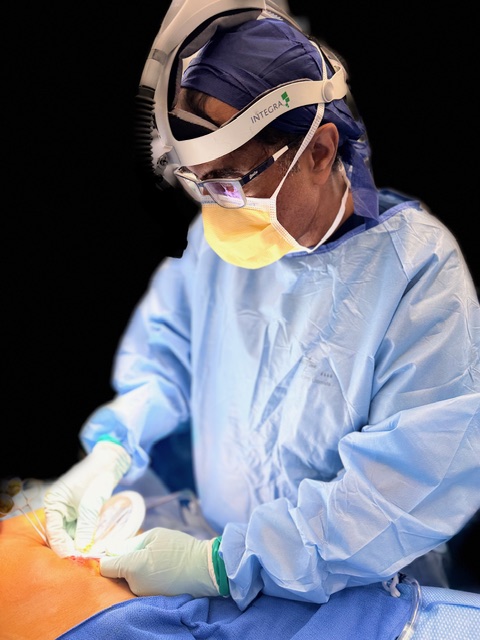
Dr Raji Kooner is a urological surgeon practising across St Vincent's Private (Darlinghurst), the Mater Hospital (North Sydney) and Bowral. He has performed ureteroscopy and pyeloscopy with laser lithotripsy for more than 20 years, using a high-powered Coherent Holmium laser with Moses technology, and has a dedicated metabolic-clinic referral pathway with renal physician colleagues for patients who form recurrent stones.
The emphasis at Sydney Kidney Stone Clinic is on complete stone clearance where feasible, minimally invasive techniques, and careful long-term follow-up to reduce the chance of another stone.
No. Small stones of about 4 mm or less often pass on their own with adequate fluid intake and analgesia. Selected small, non-obstructing kidney stones that are not causing symptoms can also be kept under active surveillance with regular imaging.
A current GP or specialist referral allows your consultation to be eligible for Medicare rebates. The rooms can advise on fees and out-of-pocket costs before the appointment.
Without preventive measures, around half of patients will form another stone within 5 to 10 years. A structured prevention plan - hydration, diet and, where indicated, targeted medication - can substantially reduce that risk.
Yes, in most cases. Flexible ureteroscopy with Holmium laser is commonly used for patients who cannot safely come off anticoagulant or antiplatelet therapy, because it avoids both the renal puncture of PCNL and the shockwaves of ESWL. Whether medication is paused around the operation is decided case-by-case with your treating cardiologist or haematologist.
Suite 1303, Level 13, St Vincent's Private Hospital
406 Victoria Street, Darlinghurst NSW 2010
Suite 1.12, Level 1
3–9 Gillies Street, North Sydney NSW 2060
Suite 9, 70 Bowral Street
Bowral NSW 2576
Arrange a consultation or request a second opinion on an acute stone, a recurrent stone problem, or a recommended procedure.